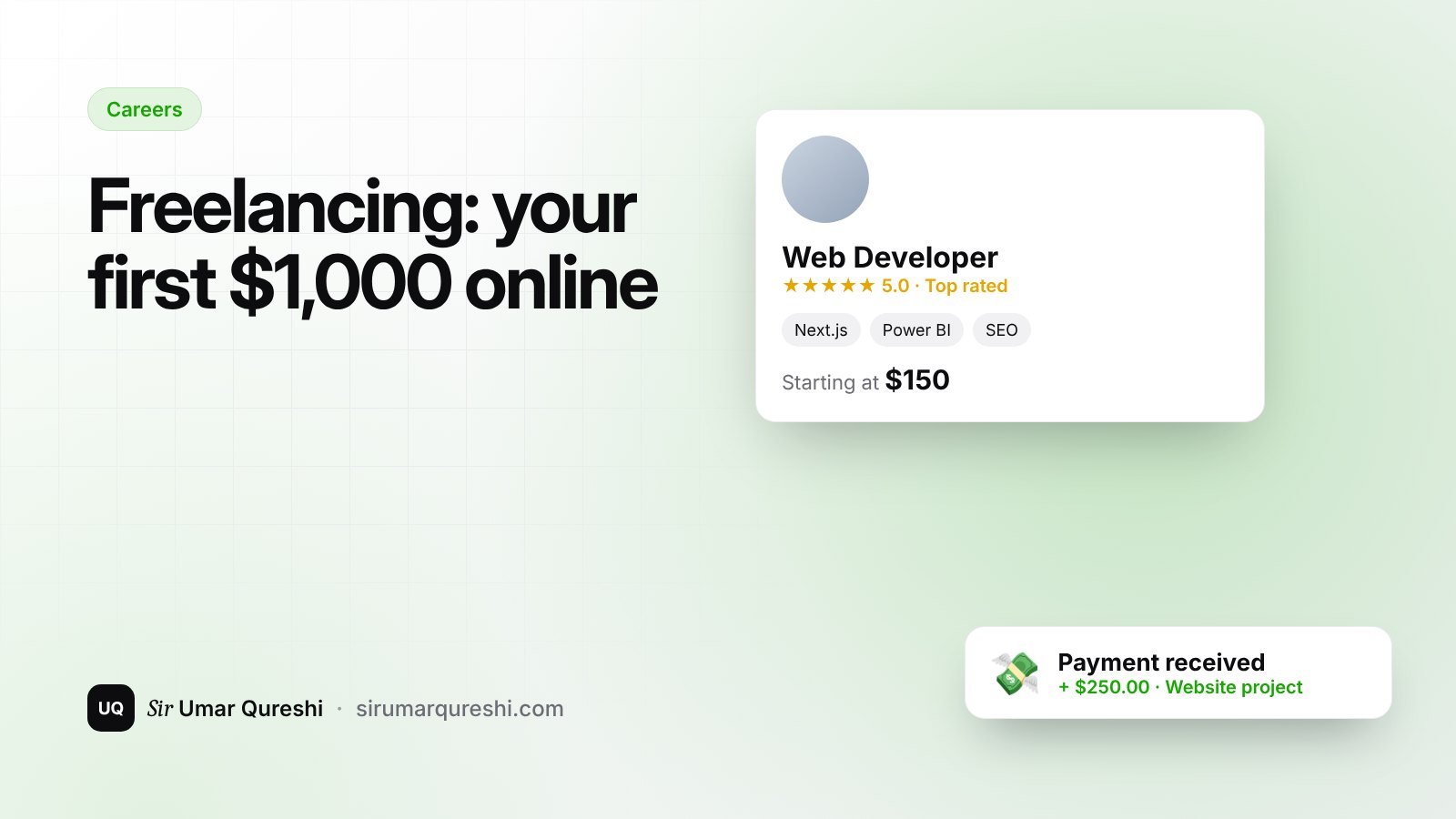
Freelancing in Pakistan works when you sell one in-demand skill, prove it with a small portfolio, and present it professionally on a platform like Upwork or Fiverr — or directly to clients on LinkedIn. Most beginners fail not because of skill but because they skip the portfolio and send generic proposals. Here is the roadmap I give my students.
Step 1: Pick one skill clients pay for
Choose a skill with steady demand and a clear deliverable. These are reliable starting points:
| Skill | Typical first gigs | Time to job-ready* |
|---|---|---|
| Web development | Landing pages, WordPress/Next.js sites, bug fixes | 4–6 months |
| Graphic design (Canva/Figma) | Social posts, logos, thumbnails | 2–3 months |
| Excel & data entry → Power BI | Cleaning sheets, dashboards, reports | 2–4 months |
| Digital marketing | Social media management, Meta ads, SEO audits | 3–4 months |
| Video editing | Reels, YouTube edits, podcasts | 2–3 months |
| Python & automation | Scraping, scripts, data reports | 4–6 months |
*With 2–3 hours of focused practice daily. Your speed will vary — consistency matters more than talent.
Step 2: Build a portfolio before you apply
Clients hire proof, not certificates. Create three to five sample projects that look like real client work. A web developer might rebuild a local business website; a Power BI learner might publish a sales dashboard from a public dataset; a designer might create a full social media kit for an imaginary brand.
💡 Tip: Put every project on one simple page — a personal website, a Behance profile or a GitHub README. One link should show everything you can do.
Step 3: Create a profile that converts
- Photo: a clear, friendly, professional headshot — not a logo or a group photo.
- Title: specific beats general. "Power BI Dashboard Developer for Small Businesses" beats "Data Expert".
- Overview: first two lines describe the client's problem and your result; then your process; then proof.
- Portfolio: your three best samples, each with a one-line result.
Step 4: Write proposals clients actually read
- Open with their problem in your own words — prove you read the job post.
- Share one relevant sample and how it solved a similar problem.
- Suggest a clear first step or a quick plan.
- End with a simple question that invites a reply.
Keep it under 150 words. Never copy-paste the same proposal to every job — clients can tell.
Step 5: Deliver like a professional
- Confirm the scope in writing before you start.
- Send progress updates without being asked.
- Deliver a little earlier than promised and ask politely for a review.
- Turn good clients into repeat clients — repeat work is where income becomes stable.
Step 6: Getting paid from Pakistan
Freelancers in Pakistan commonly withdraw through services such as Payoneer or direct transfer to a local bank account, depending on the platform. Fees, limits and regulations change, so check the current options on your platform and with your bank before choosing — and keep records of your income for tax purposes.
Common mistakes to avoid
- Learning five skills at once instead of mastering one.
- Underpricing so much that you burn out — raise rates after every few good reviews.
- Moving payments off-platform when the platform forbids it — you can lose your account.
- Ignoring communication: fast, clear replies win more jobs than slightly better skills.
Frequently asked questions
Which freelancing skill is best for beginners in Pakistan?
Pick a skill you can practise daily and show visually: web development, design, Excel/Power BI, digital marketing or video editing are proven starting points.
How long does it take to get the first order?
With a portfolio and tailored proposals, many students land their first small job within one to three months of actively applying. Without a portfolio, it can take much longer.
Do I need a degree to freelance?
No. Clients care about results. A degree helps your thinking, but your portfolio and reviews are what win work.
Want structured training with a portfolio at the end? See my teaching programmes.