People are often surprised that I am both a teacher and a developer. To me they are the same job: you take something complicated and make it simple enough for someone else to use with confidence.
1. Clarity beats cleverness
A lesson that only the teacher understands has failed. Code is the same. When I write software, I write it so that the next developer — or a student — can read it and understand it on the first pass. Clear names, small functions and predictable structure save more time than any clever trick.
2. Every user is a student
In class you learn to notice the moment a student gets lost. In product design, that moment is a confusing button or a form that asks too much. Designing interfaces with a teacher's eye means removing those moments one by one.
3. Feedback loops make everything better
Good teaching is a loop: explain, check, adjust. Good software is built the same way: ship a small version, watch how people use it, improve. That is exactly how I approached building OnePlace, a marketplace and e-commerce SaaS for Pakistan.
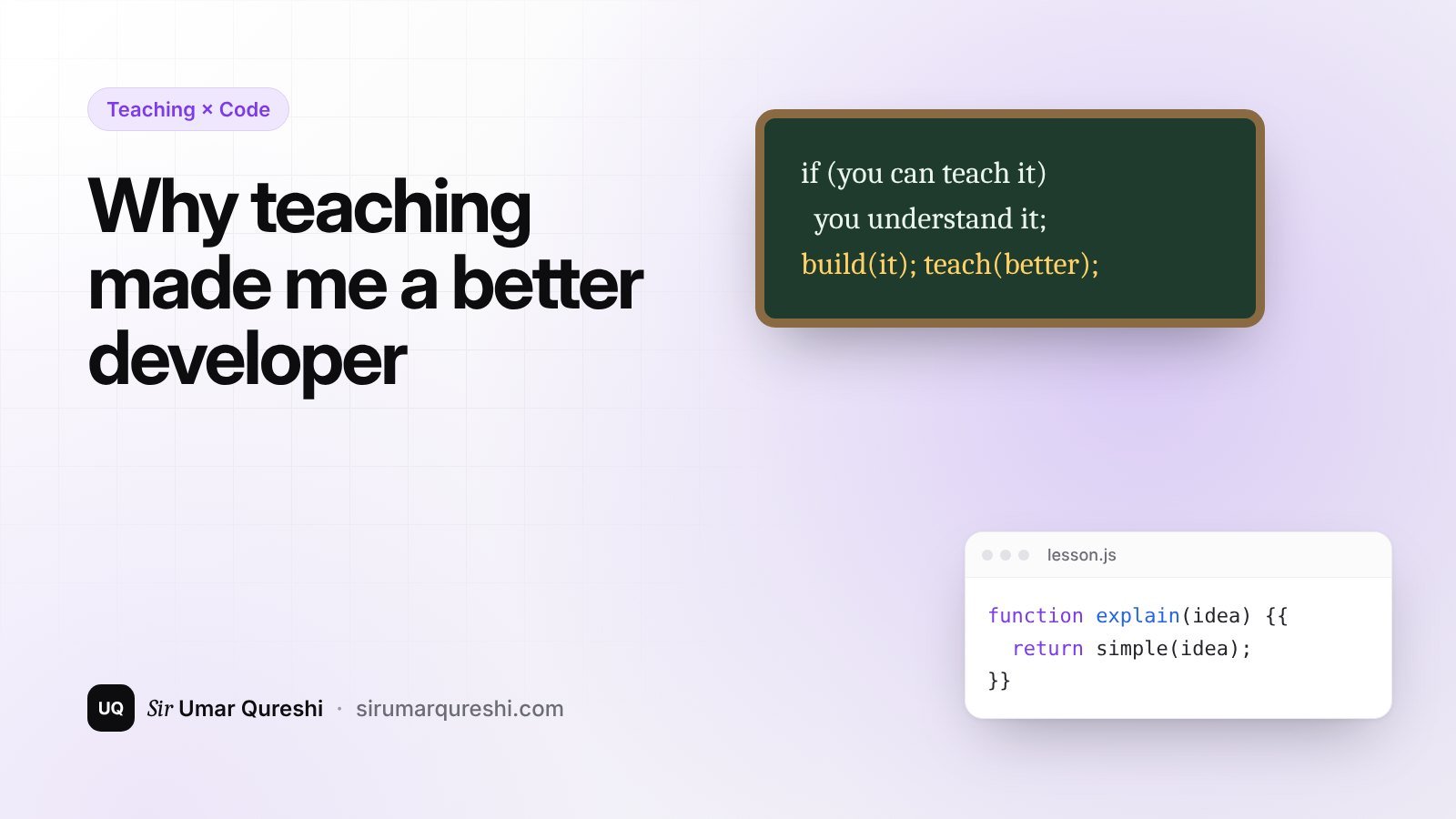
If you can teach it, you understand it. If you can build it, you can teach it better.
The takeaway
If you are a teacher curious about code, your classroom skills are an advantage. And if you are a developer, try teaching what you know — it will sharpen your thinking more than any course.
Frequently asked questions
Can a teacher become a software developer?
Yes. Teachers already have strong communication, planning and problem-solving skills; adding programming practice and a project portfolio makes the switch realistic.
Why should developers teach?
Explaining a concept forces you to understand it deeply, which makes you a clearer thinker and a better engineer.