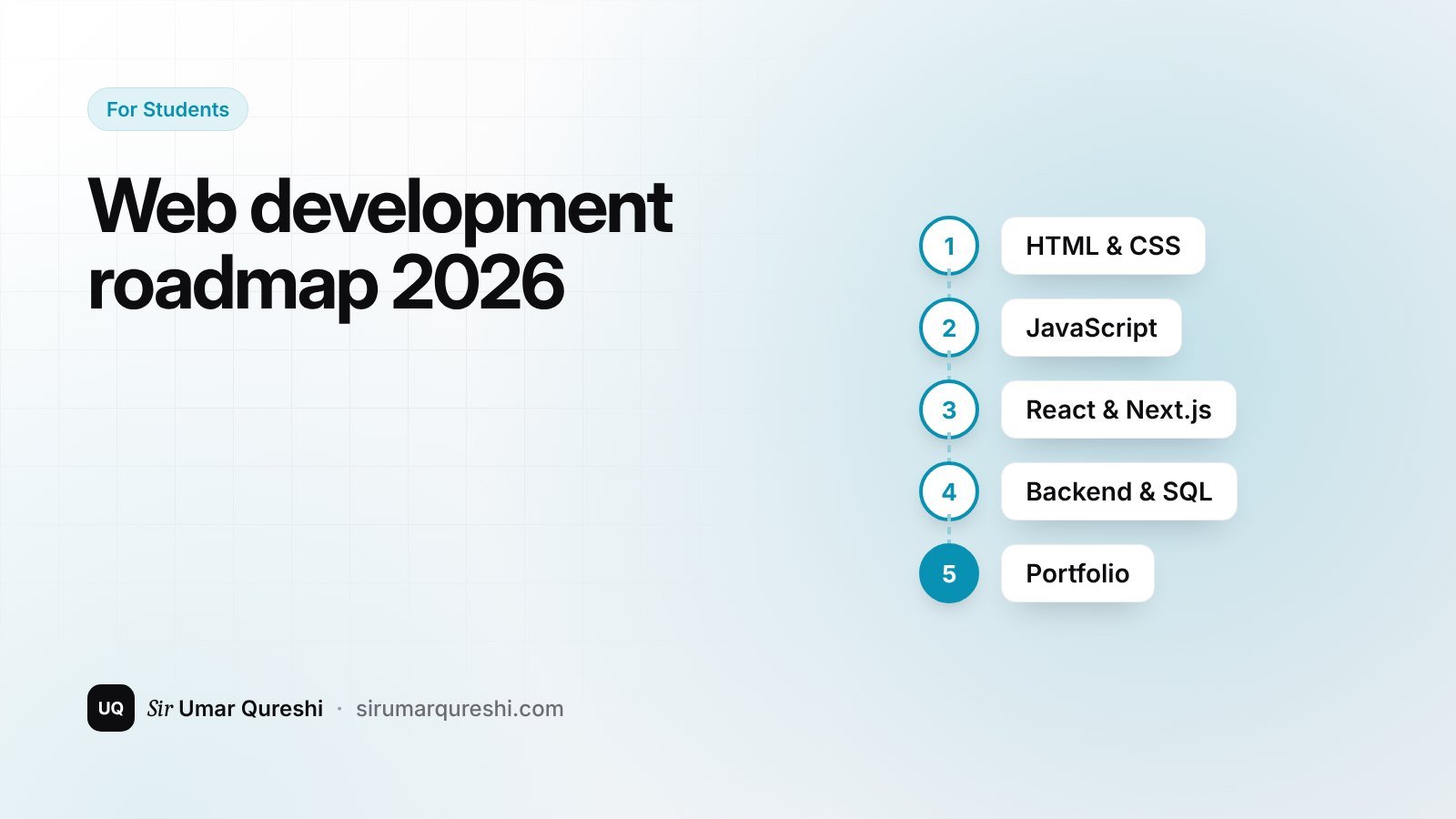
Students ask me the same question every term: 'Sir, where do I start?' This is the roadmap I give them. Follow it in order and build something at every stage.
Stage 1 — The foundations (4–6 weeks)
- HTML: structure and meaning of a page
- CSS: layout with Flexbox and Grid, responsive design
- Project: rebuild a simple page you like, from scratch
Stage 2 — JavaScript (6–8 weeks)
- Variables, functions, arrays, objects, the DOM
- Fetching data from an API
- Project: a to-do app or a weather app
Stage 3 — React and Next.js (6–8 weeks)
- Components, props and state
- Routing, layouts and SEO with Next.js
- Project: your own portfolio website
Stage 4 — Backend and databases (6–8 weeks)
- Node.js or PHP, REST APIs
- SQL with MySQL: tables, relationships, queries
- Project: a small full-stack app with login
The habit that matters most
Build a little every day and finish what you start. A small finished project teaches more than ten unfinished tutorials. Put everything on GitHub — it becomes your CV.
Frequently asked questions
How long does it take to learn web development?
With steady daily practice, most students reach a job-ready beginner level in about six to nine months by following HTML/CSS, JavaScript, React/Next.js and backend basics in order.
Should I learn React or Next.js first?
Learn React fundamentals first, then Next.js, which builds on React and adds routing, SEO and server rendering.