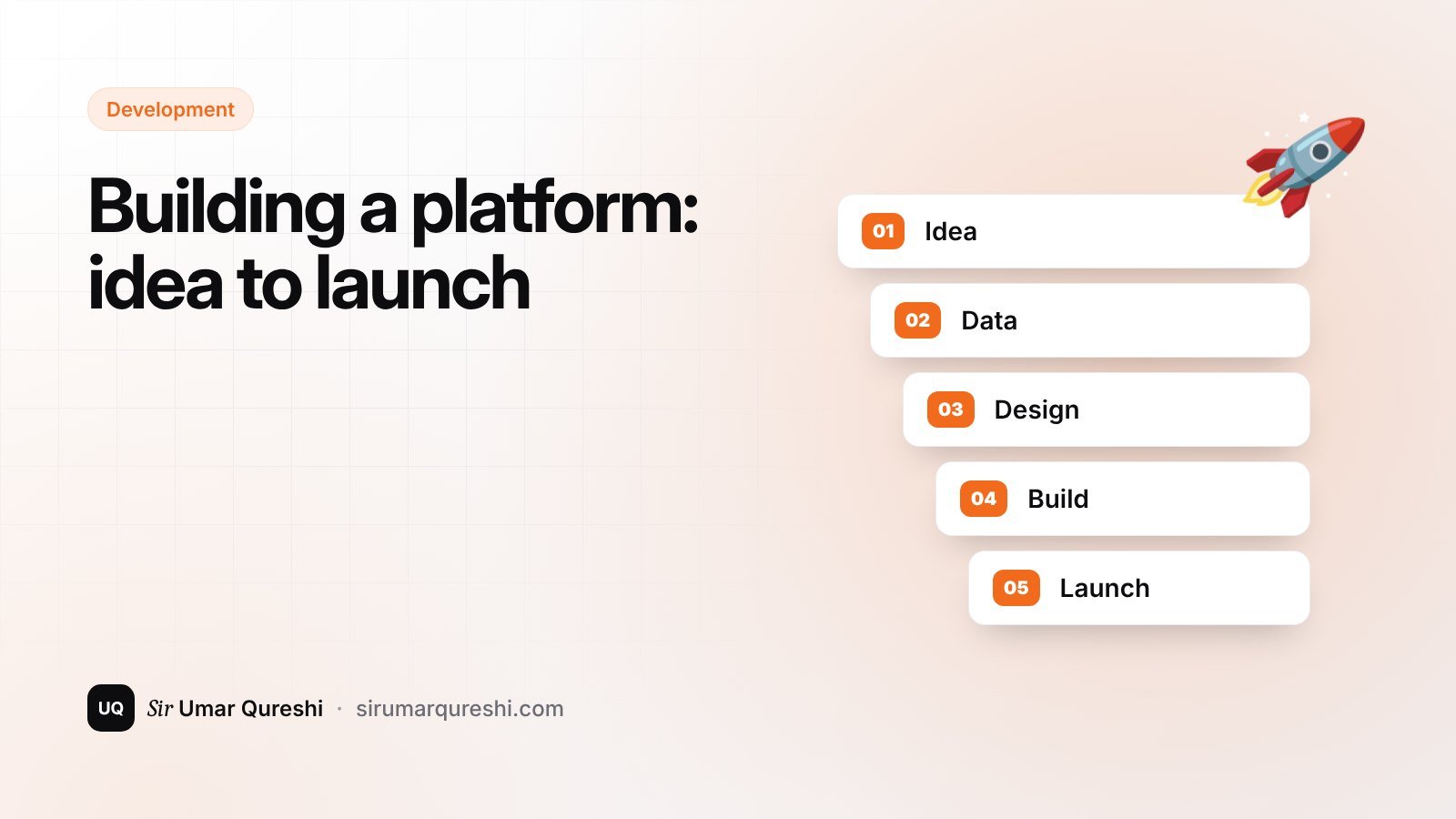
Building an entire platform sounds overwhelming. Broken into the right steps, it becomes a series of decisions you can make one at a time. This is the process I followed to build OnePlace — a multi-vendor marketplace and Shopify-style SaaS with separate seller, admin, customer and affiliate dashboards.
Step 1 — Define the one job
Before any code, write one sentence: what job does this platform do for its users? Every feature must support that sentence. Everything else goes on a 'later' list.
Step 2 — Map the journeys
List who uses the platform and the path each person takes, from first visit to getting value. These journeys become your pages, your navigation and your database tables.
Step 3 — Design the data first
A clean database design prevents most future bugs. Name tables clearly, define relationships early and decide what must be unique. Changing a UI is easy; changing data after launch is not.
Step 4 — Build a small design system
- One type scale and a limited colour palette
- Reusable buttons, inputs, cards and tables
- Consistent spacing so every page feels related
Step 5 — Ship the core, then iterate
Launch the smallest version that does the one job well. Real users will tell you what to build next far better than any plan can.
Step 6 — Make it fast and findable
Performance and SEO are features. Server-rendered or static pages, compressed images, clean URLs and structured data help both people and search engines find and trust your product.
Frequently asked questions
How long does it take to build a platform like a marketplace?
A focused first version can be built in a few months; a full platform with multiple dashboards, payments and mobile apps grows over many iterations after launch.
What should I build first in a SaaS?
The one core job users pay for, with a clean database design. Everything else can come in later releases.