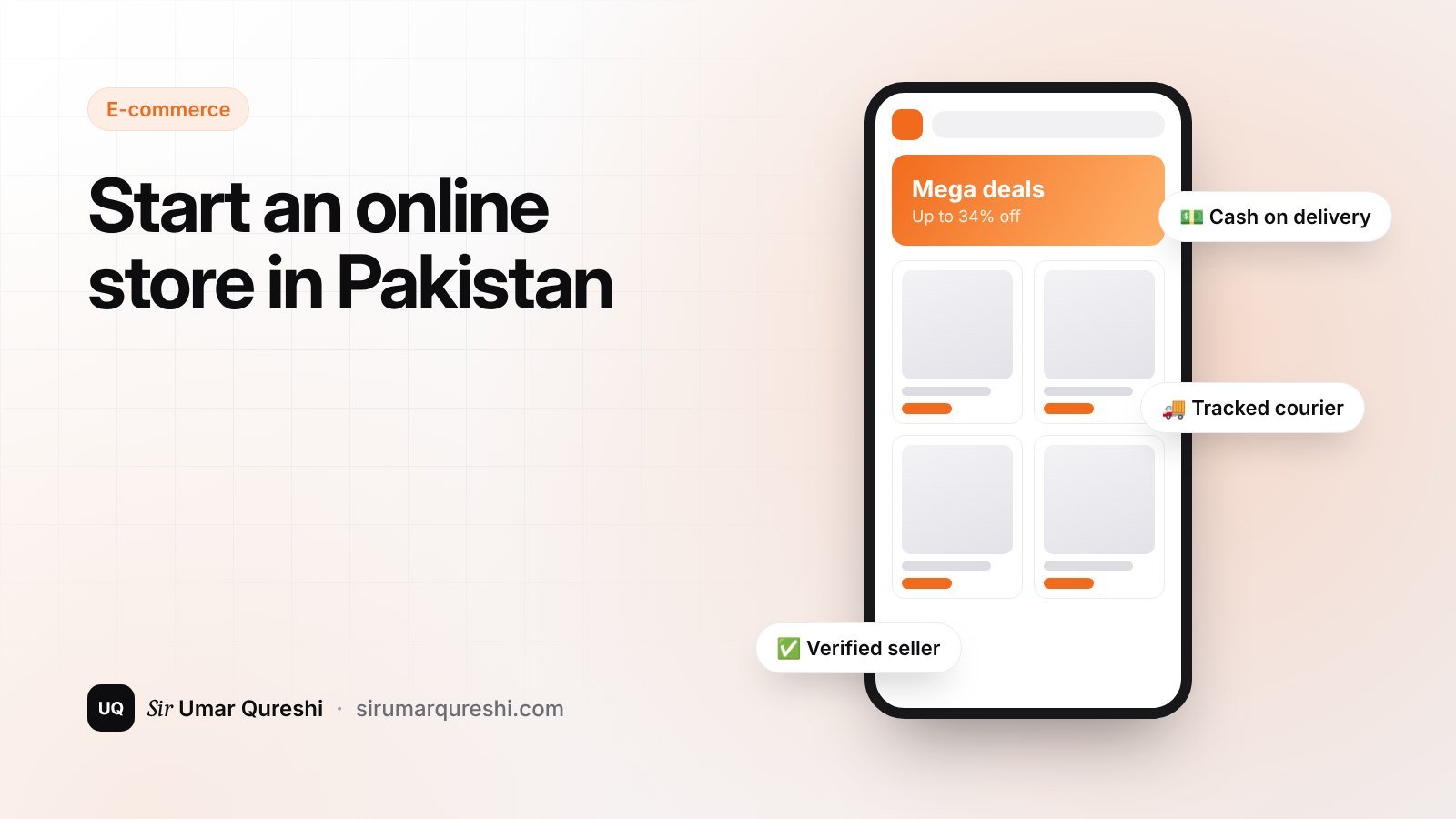
To start an online store in Pakistan you need five things: a product people already search for, a place to sell it (a marketplace, your own website, or both), payment options Pakistanis trust — especially cash on delivery — a reliable courier, and a simple marketing plan. This guide walks through each step in the order I recommend to sellers who join OnePlace, the marketplace and store platform I built.
Step 1: Choose a product that already sells
Beginners often start with what they like. Successful sellers start with what customers are already buying. Before you invest a single rupee, check demand:
- Search the product on Google, YouTube and marketplaces and look at how many sellers and reviews exist.
- Prefer products that are light, hard to break and easy to ship — courier costs and returns eat profit fast.
- Aim for a margin of at least 30–40% after courier, packaging, payment and return costs.
- Start with one niche (for example men's leather shoes or kitchen tools) instead of a random mix.
Step 2: Marketplace, your own store — or both?
This is the biggest decision for a new seller, and the honest answer is that the best businesses use both. A marketplace gives you customers on day one; your own store gives you a brand, better margins and customer data.
| Marketplace | Your own website | Marketplace + own store (SaaS) | |
|---|---|---|---|
| Customers on day one | Yes | No — you bring traffic | Yes |
| Your own brand & domain | Limited | Yes | Yes |
| Technical work | None | High (or hire a developer) | Low |
| Payments & COD | Handled | You integrate | Handled |
| Courier integration | Handled | You integrate | Handled |
| Best for | Testing products | Established brands | Growing sellers |
That third column is exactly why I built OnePlace as a marketplace and a Shopify-style SaaS: a seller registers once in the Seller Center, gets a storefront and a full dashboard, and also appears in front of marketplace buyers.
Step 3: Register your business basics
- A business name and a matching social media handle.
- A business bank account or a dedicated account for sales — keep personal and business money separate.
- Mobile wallets your customers use (JazzCash, Easypaisa) for prepaid orders.
- Talk to a tax adviser about registration and tax obligations once sales grow — rules change, so get current advice.
Step 4: Get payments right — COD is still king
Most Pakistani shoppers still prefer cash on delivery because they want to see the product first. Offer COD, but protect yourself: confirm every order by phone or WhatsApp before dispatch, and offer a small discount for prepaid orders through JazzCash, Easypaisa or card.
💡 Tip: Fake and cancelled COD orders are the number one profit killer. A two-minute confirmation call before shipping can cut returns dramatically.
Step 5: Choose a courier and packaging
Use a courier with nationwide coverage and live tracking — buyers check tracking constantly. On OnePlace, TCS and Leopards are integrated so tracking numbers flow into the order automatically. Whatever you use, invest in sturdy packaging and a thank-you card: it costs little and earns reviews.
Step 6: Product pages that sell
- Title: what it is + key feature + size or variant (e.g. "Men's leather loafers — brown, size 41").
- Photos: 5–8 clear photos on a plain background, including one in use and one showing size.
- Description: benefits first, then specifications, then delivery and return policy.
- Price: check competitors, then compete on trust (photos, reviews, return policy), not only on price.
Step 7: Marketing on a small budget
- Short videos on TikTok, Instagram Reels and Facebook showing the product in use.
- WhatsApp Business catalogue and broadcast lists for repeat customers.
- Meta ads with a small daily budget aimed at one city first, then scale what works.
- A blog or buying guides on your store — this is how you get free Google traffic over time.
Step 8: Measure, then scale
Track four numbers every week: orders, delivery success rate, return rate and profit per order. When delivery success is high and profit per order is healthy, increase ad spend and add related products. When returns are high, fix product quality or order confirmation before spending more.
Frequently asked questions
How much money do I need to start an online store in Pakistan?
You can start small with a limited stock of one product, good photos and a marketplace listing. Your biggest early costs are inventory, packaging and a small ad budget — not technology.
Is cash on delivery necessary?
For most Pakistani customers, yes. Offer COD with order confirmation, and encourage prepayment with a small discount.
Should I build my own website or sell on a marketplace?
Start where customers already are — a marketplace — and add your own branded store as you grow. Platforms like OnePlace let you do both from one dashboard.
If you want a custom store, marketplace or SaaS built for your business, let's talk.